Trinity has Pride


June is LGBTQIA+ Pride month. Trinity is proud to be a Reconciling In Christ partner, committed to working for inclusion and justice for all of God’s children in our community and beyond.
https://www.reconcilingworks.org/

Our Faith Friends & Fellowship group will be watching and discussing the documentary 1946: The Mistranslation That Shifted Culture. It is a worthwhile viewing experience and an informative stimulus for further discussion about Biblical origins and Christian theology.


1946: The Mistranslation That Shifted Culture is a feature documentary that follows the story of tireless researchers who trace the origins of the anti-gay movement among Christians to a grave mistranslation of the Bible in 1946.
https://www.1946themovie.com/


Mental Health in a Sick World - ELCA Study Guide

May is Behavioral Health Awareness month and our Faith Friends & Fellowship discussion group will be helping each other learn how to better support ourselves and our neighbors through difficult social and behavioral struggles.

Visit the Living Lutheran website to see a study guide on "Mental Health in a Sick World."


Ten Reasons Why Lutherans Care for All Creation


As Trinity’s RIC 12 Months of Awareness and Action project for 2026 continues, April is Earth & Environmental Stewardship Awareness Month. The following comes from the Lutherans For Restoring Creation organization. (https://lutheransrestoringcreation.org/top-10-reasons-why-lutherans-care-for-all-creation)


Lutherans care for creation for many reasons, including:

1. Theology: We affirm God as creator of all. We have an incarnation theology that cherishes the continuing presence of God in, with, and under all reality. We see redemption as the restoration of creation, as “new creation.” We see the future straining toward the fulfillment of creation.

2. Cross and Resurrection: The gospel leads us to see God in solidarity with the human situation in all its pain and agony, especially the most vulnerable—humans and non-humans. A theology of the cross gives us solidarity with “creation groaning in travail” and stresses that God redeems all creation. Our affirmation of resurrection offers hope for new life in this world.

3. Worship and Sacraments: We affirm that the material is a vehicle of the divine and that Christ is present in such ordinary elements of life as grapes and grain—the basis for our delight in and reverence for creation. Our worship invites us into transforming encounters with God deep in the flesh and in the world. We are called to worship God with creation.

4. Ecclesiology: Our human vocation is “to serve and to preserve” Earth. We believe that the church exists for the sake of the world. We do not have an escapist theology. We are called to continual reformation in response to the needs and crises of this life. When Luther was asked what he would do if the world would end tomorrow, he apparently replied, “Plant a tree.”

5. Ethics: We have an ethic of faith-active-in-love for neighbor and for all creation. Liberated from a legalism that enslaves, we are freed to address new situations, such as the ecological state of the world. We do so not to dominate but as servants to our human and non-human neighbors. We do so not out of fear or guilt or arrogance but joyfully out of grace, love, and gratitude.

6. Social Ministry: With a heritage back to the Reformation, Lutherans have a history of social service to the poor, the elderly, the sick, the oppressed, the marginalized—through hospitals, homes for the elderly, social ministry agencies, Lutheran Immigration Service, and Lutheran World Relief. We extend that service to healing Earth community.

7. Advocacy: We ELCA Lutherans have relevant social statements: “Caring for Creation” and “Sustainable Livelihood for All.” We have a staff person in environmental/hunger advocacy in Washington and Lutheran Public Policy offices in many states.

8. Scholarship and Education: Many Lutheran scholars have written and spoken on ecology—in theology, ethics, biblical study, and social commentary. Colleges and seminaries of the ELCA have environmental ministry courses that prepare Lutherans for leadership in church and world. Many continuing education events for clergy and laity highlight creation care.

9. Caring for Creation across the church:Several synods with creation-care committees have declared themselves to be Care-For-Creation Synods. Many Lutheran congregations incorporate Earth-care commitment in their life and mission—worship, education, building and grounds, discipleship at home and work, and public ministry. Lutheran camps have brought environmental concerns to many people. The ELCA headquarters has a Green Team that works to model environmental action.

10. Organizations for Earthkeeping: Lutherans have led in the Green Congregation Program, the Green Seminary Initiative, the Web of Creation, promoting creation-care worship throughout the church year and the Season of Creation, and, of course, Lutherans Restoring Creation (https://lutheransrestoringcreation.org).

Lutherans are in a critical position to listen to the cry of the poor along with the cry of Earth and to take leadership in addressing these critical issues of our day. In whatever context you may be serving, we encourage you to participate in this endeavor.

Jesus gave her water and it wasn’t from the well!

John 4 - Jesus meets a Samaritan woman at the well and breaks down, ethnic, gender, and religious barriers by having a conversation with her.


Whoa, Jesus (He gave me water) gave me water (He gave me water)Jesus (He gave me water) gave me water (He gave me water)Jesus (He gave me water) gave me water (He gave me water)I wanna let His (He gave me water) praises swell (He gave me water)Jesus (He gave me water) gave me water (He gave me water)Jesus (He gave me water) gave me water (He gave me water)Jesus (He gave me water) gave me water (He gave me water)And it was not in the well
Well, there was a woman from SamariaCame to the well to get some waterThere she met a stranger who did a story tellThat woman dropped the pitcher she was drinkingWas made richer from the water He gave herAnd it was not in the well, whoa
Yes, He (He gave me water) gave her water (He gave me water)Jesus (He gave me water) gave her water (He gave me water)Jesus (He gave me water) gave her water (He gave me water)I wanna let His (He gave me water) praises swell (He gave me water)Jesus (He gave me water) gave her water (He gave me water)He gave (He gave me water) that woman water (He gave me water)Gave her livin', (He gave me water) lovin', lastin' water (He gave me water)And it was not in the well
Well, on that woman He had pityShe ran back to the cityCrying, glory, Hallelujah!And did His wonders tellShe left my Savior singingShe came back to Him bringingThe time she had her water, LordAnd it was not in the well, whoa
Yes, (He gave me water) gave her water (He gave me water)Jesus (He gave me water) gave her water (He gave me water)Jesus (He gave me water) gave her water (He gave me water)I wanna let His (He gave me water) praises swell (He gave me water)Jesus (He gave me water) gave that woman water (He gave me water)Gave her (He gave me water) that livin', lovin', lastin' water (He gave me water)Water (He gave me water, He gave me water)And it was not in the well
Well, Lord, that woman left him shoutin'There was no room for doubtin'That she had made her SaviorWho did His wonders tellEvery time she'd doubt HimShe'd start to think about HimThe man who gave her that water, LordAnd it was not in the well, whoa
Yes, (he gave me water) he gave her water (He gave me water)Jesus (He gave me water) gave her water (He gave me water)Jesus (He gave me water) gave her water (He gave me water)I wanna let His (He gave me water) praises swell (He gave me water)Hey, (He gave me water) we give that woman water (He gave me water)Gave her (He gave me water) that lovin', lastin' water (He gave me water)Water, (He gave me water) water, water, water, lovin' water (He gave me water)And it was not in the well

March - Women’s History and Contribution Awareness Month


This year, our Reconciling In Christ Core Team is highlighting a different justice focus each month. March is Women’s History and Contribution Awareness Month — a time to give thanks for the faith, courage, leadership, and service of women throughout the Church and in our own community.

The Virginia Synod of the Evangelical Lutheran Church in America celebrates a historic milestone: the election of Rev. Dr. Phyllis Milton as its first female bishop and first African American bishop. Her election represents more than a milestone. It reflects resilience, deep scholarship, pastoral wisdom, and a Spirit-led commitment to justice and inclusion.

Bishop Milton has faithfully served congregations across Virginia, including Holy Communion Lutheran Church in Portsmouth, First Lutheran Church in Norfolk, and Gloria Dei Lutheran Church and School in Hampton. She has also served as Synodical Minister for Christian Formation for the Virginia Synod.

Born in Levelland, Texas, Bishop Milton earned degrees from South Plains College and Morgan State University with highest honors, along with graduate degrees in business and Christian education. She holds a doctorate in Church Leadership Development and Organizational Systems and completed her Lutheran studies at Lutheran Theological Southern Seminary. In addition to parish ministry, she has worked as a Christian education consultant and adjunct faculty member.

As we give thanks for Bishop Milton’s leadership, we also honor the countless women, named and unnamed, whose faithfulness has shaped our Church. May we continue to uplift and affirm women in every expression of ministry, trusting the Spirit to lead us toward a more just, inclusive, and faithful future.

Anthony Carter’s Hard-Earned Hope

As we close out Black History and Culture Awareness month, we highlight yet another inspiring and modern figure. Anthony Carter is a writer, retired chief diversity officer at Johnson & Johnson, and former press secretary to New York City Mayor, David Dinkins. In his new memoir “This I Know,” Carter shares his principles for a life of faith and optimism, and why he believes diversity is the very design of God. 

Below is an excerpt from an interview he gave with his Alma mater, published in Fordham Magazine.


In New Memoir, Anthony Carter Shares Hard-Earned Hope

February 26, 2026; By Franco Giacomarra

You built a distinguished career on your expertise and passion for diversity in and beyond the workplace. As attitudes and practices continue to change, do you feel you retired just in time or too soon?

There’s never an end to cultural diversity. It includes the differences, the thoughts, the perspectives, the ideas, the values of different people. When that is all harmonized together, it just makes beautiful music.


It is disturbing that we’re defining the context now as something that’s disruptive and not allowing other folks to exist. Diversity in itself is pure. It encompasses every one of us, and when you look at multiculturalism in a room, or “that gorgeous mosaic” that David Dinkins used to talk about, and you start tapping into different perspectives, it brings such richness and harmony to whatever that outcome is supposed to be.

“Diversity isn’t a challenge to overcome—it’s the very design of God, and a strength that makes us more whole”
—Anthony P. Carter, from This I Know: Principles for a Life of Faith and Optimism

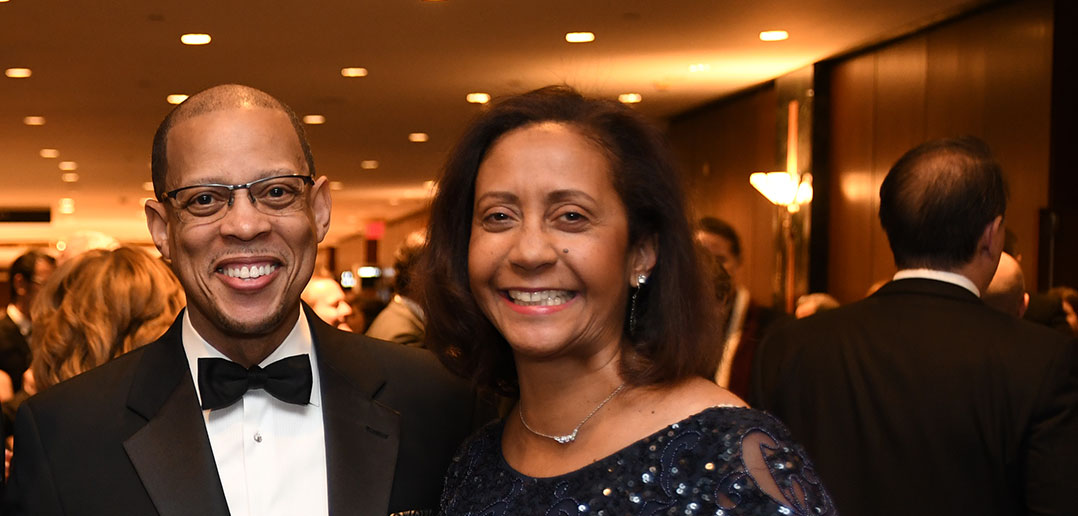
Anthony and Wendy Carter smiling during cocktail hour
Carter with his wife, Wendy, at the annual Fordham Founders Scholarship Dinner. Photo by Chris Taggart
Read the full article HERE.

Communion


Communion

by Rob Hardy


There’s no bread.

The bakers have gone into hiding. 

The seats at the table are empty.

The Twelve are marching with the thousands.

The streets are filled with a new song.

Only Judas sits at Target Plaza, counting his silver, while Pontius Pilate issues a carefully-worded statement.

Meanwhile the centurions have quotas to fill.

But out on the streets there’s a Communion.

Jesus takes the city in his hands and says,

“This is my body, broken for you.”


Rob Hardy

2nd February, 2026


Honoring Black Voices Through Music and Poetry

During our February discussion group, we explored how Black voices have shaped American culture throughout history. Much of our conversation centered on the profound influence Black artists have had on nearly every genre of American music — and how often those foundational contributions have been overlooked, minimized, or erased. We were struck by when many of these works were created and by how powerfully they still resonate today, reminding us that progress toward racial equity has been uneven and incomplete.

Together, we asked difficult questions: Why do societies so often fail to learn from the harms of the past, allowing injustice and division to persist? What is it about fear — of difference, of not belonging — that leads us to construct hierarchies instead of communities?

As Maya Angelou reminds us, “History, despite its wrenching pain, cannot be unlived, but if faced with courage, need not be lived again.”

Watch this short video from National Day of Racial Healing: Can we end racism? Two African Americans weigh in and share how they are healing.


(Click on the images above to see examples of their artistic gifts to us)

February is Black History and Culture Awareness Month

In 2026, our RIC team is highlighting a different inclusion and justice topic each month. February is Black History and Culture Awareness Month, and we will gather to celebrate the rich artistic, cultural, and spiritual contributions of Black and African American communities that have shaped our shared life and faith.

At the same time, we acknowledge the painful history of racism, inequity, and oppression in both our nation and the church. We invite you to explore this resource from the National Day for Racial Healing to deepen your understanding of how we arrived here and how we can move forward together toward genuine racial equity.


Have Hope

In the wake of events occurring in the city of Minneapolis, MN we look for spiritual guidance on how to offer support and solidarity for our neighbors experiencing unfathomable fear and injustice.

Reading from Matthew this morning, the Holy Spirit offered this.

Matthew 12:18-21 (CSB) 18 Here is my servant whom I have chosen, my beloved in whom I delight; I will put my Spirit on him, and he will proclaim justice to the nations. 19 He will not argue or shout, and no one will hear his voice in the streets. 20 He will not break a bruised reed, and he will not put out a smoldering wick, until he has led justice to victory. 21 The nations will put their hope in his name.

I know that verse is directly meant for Jesus. But is it possible for us to recognize other people in that verse? When I read it I also think about Martin Luther King, Dietrich Bonhoeffer, Gandhi, and Mother Teresa. They were flawed of course, and not perfect as Jesus; but certainly they had the Spirit of the Lord upon them? And certainly their messages gave hope. I too have hope.


January is Poverty Awareness Month

Our FFF discussion group talked about what poverty is, how it impacts our communities, and ways we can help address our community’s needs. This study guide is a resource you can use to learn and think more about poverty in your own community. 

https://www.inclusive-church.org/wp-content/uploads/2020/05/Poverty-Study-Guide.pdf


Advent brings Hope, Peace, Joy, and Love

During this season of anticipation, take a moment each week to reflect on the themes of Advent - Hope, Peace, Joy, and Love. Here is a devotional from ReconcilingWorks that you may enjoy. Written by Rev. Liza Hawkins (she/they), this resource offers weekly reflections, prayers, and actions to help you and your community prepare their hearts for the coming of Christ.


https://www.reconcilingworks.org/wp-content/uploads/2025/12/ReconcilingWorks-Advent-Devotional-2025.pdf

2 Timothy 4:1-5

 
I charge you in the presence of God and of Christ Jesus who is to judge the living and the dead, and by his appearing and his kingdom: preach the word, be urgent in season and out of season, convince, rebuke, and exhort, be unfailing in patience and in teaching. For the time is coming when people will not endure sound teaching, but having itching ears they will accumulate for themselves teachers to suit their own likings, and will turn away from listening to the truth and wander into myths. As for you, always be steady, endure suffering, do the work of an evangelist, fulfil your ministry.

NRSVue


"A Welcoming, Accessible Church"

 On Sunday, October 12, 2025, we spent some time discussing ways we can be more welcoming and inviting to our siblings in Christ who are neurodivergent.  

We used an article from the summer issue of Living Lutheran, "A Welcoming, Accessible Church," as our jumping off point for discussion.  The article gives some information about what neurodivergence is, and includes a link to a study guide that offers more information.  

From the article, "Neurodivergence—a term encompassing conditions such as autism, attention-deficit/hyperactivity disorder (ADHD), dyslexia and other cognitive variations—represents a growing area where understanding and accommodation are essential." Neurodivergent people have different strengths and can see the world in different ways from neurotypical people.  It's important to remember that there is no "normal" way for a brain to work.  We are all different and unique!

Using the article, available here, we began our discussion using examples of families who found warmth within a church that was willing to meet them where they are.  One child, who is autistic, relates more to nature than to faith, and the pastor began incorporating more language about nature into his sermons.  Another church installed a sensory fence on their property.  We learned there are so many ways to make our church inviting to our neurodivergent siblings!

We discussed ways we could make our own church more welcoming, too.  Some of our ideas were to add information to our "what to expect" page on our website, to include more details about noise levels and areas where folks can move to if they need a moment away.  Two of our youth members talked about friends who are neurodivergent (anonymously) and how they relate to those friends.  They suggested having noise-canceling or reducing headphones and fidgets available to anyone who might want them. Another idea was having a blank page in the bulletin for those who need to keep their hands busy when they're listening.

It was such a good discussion and we were delighted at how eager and enthusiastic our members were to provide ideas and suggestions for how to help make our church more welcoming.

If you would like more information on what neurodivergence is and how you, your church, or other organization can work toward being more welcoming to neurodivergent people, consider checking out the Living Lutheran study guide, available here.  You can also find information about neurodivergence online at other sources, or by talking to your doctor.

Our most important takeaway is remembering that listening to our siblings is the best way to make them welcome, and a willingness to meet them where they are can make a huge difference for someone who isn't sure how they might fit in, especially at a new church.

Flipping Tables

"The world doesn’t need more Christians who stay silent in the face of injustice. It needs believers who are willing to take risks, to disrupt complacency, to stand up for the vulnerable. After all, the same Jesus who flipped tables also carried a cross—the ultimate act of love and sacrifice."


"The next time you’re tempted to stay quiet, remember the scene in the temple. Picture the overturned tables, the scattered coins, and the fire in Jesus’s eyes. Then ask yourself: what tables need flipping in my world? And how can I, however imperfectly, follow His example of righteous rebellion?"

-an excerpt from Relevant Magazine

-image from The Naked Pastor

Exploring our Biases: Part 3


The Dunning-Kruger Effect

During our third and final session on biases, we learned about and discussed several types of biases. There was a lot of discussion about the specific bias known as the Dunning-Kruger Effect. This bias is a psychological phenomenon where people with low ability or knowledge in a particular area tend to overestimate how good they are at it.

For example:

Imagine someone who just started learning to play guitar. After a few lessons, they might feel like they're amazing, maybe even better than some pros. But in reality, they’ve just scratched the surface. They don’t know enough yet to realize how much they don’t know.

On the flip side, people who are actually skilled often underestimate themselves, because they understand how complex the subject really is and see what they still have to learn.

  • Beginner: “This is easy! I’m great at it!”

  • Expert: “This is hard. I still have a lot to learn.”

So, the Dunning-Kruger Effect is basically, “The less you know, the more you think you know.”

It’s not about being dumb — it’s about how our confidence and competence don't always line up.

How to avoid The Dunning-Kruger Effect:

Realize that Confidence ≠ Competence

Be aware that feeling confident isn't always a sign you're right. And feeling uncertain doesn't mean you're wrong. Confidence is just a feeling — not a fact.

Stay humble, keep learning, and regularly question your assumptions.


For more information about The Dunning-Kruger Effect, read this article on PsychologyToday.com.


Small acts of inclusion

 Our youth chalked the sidewalks of our church and school last weekend to show those in and outside of our community that they are loved by God and welcomed by our church family. You can do small acts of inclusion too…every bit of kindness matters. 


Wheel of Privilege and Power

One of our congregants provided this tool, the Wheel of Privilege and Power, for our continued discussion on examining our biases. The following is from the Equity & Inclusion teaching resource section of the University of Wisconsin-Madison's Center for Teaching, Learning & Mentoring (CTLM) Instructional Resources KnowledgeBase. 


In the center is the word “power”, and on the outside of the wheel is the word “marginalized”. The categories are:

  • Body size, with large on the margins, and slim in the center; 
  • Mental health, with vulnerable on the margins and robust in the center;
  • Neurodiversity, with significant neurodivergence on the margins, and neurotypical in the center; 
  • Sexuality with lesbian, bi, pan, and asexual on the margins, and heterosexual in the center;
  • Ability with a significant disability on the margins, and able-bodied in the center; 
  • Formal education with elementary education on the margins and post-secondary in the center;
  • Skin color with dark on the margins, and white in the center;
  • Citizenship with undocumented on the margins, and citizens in the center;
  • Gender with trans, intersex, and non-binary on the margins and cisgender in the center;
  • Language with non-English monolingual on the margins and English in the center;

  • Wealth with poor on the margins and rich in the center;
  • Housing with homeless on the margins and owning property in the center.
Note: This graphic is not intended to capture all areas of marginalization. The intent is to provide a framework to view power and privilege. As you identify additional areas of marginalization, take time to reflect on how you might represent that within the model.

You may find it a helpful exercise to use this wheel to examine a communication dynamic between yourself and someone else in the future. Find each portion of the wheel that you think describes yourself and then consider where the person you are communicating with might find themselves on the wheel. Compare and note any power differentials identified. This may be a helpful tool in identifying unconscious or implicit biases that might impact your interactions with others, and in so doing create a space for better and more equitable communication.

Exploring Our Biases - Part 2

"Human beings are poor examiners, subject to superstition, bias, prejudice, and a PROFOUND tendency to see what they want to see rather than what is really there."
M. Scott Peck

At this month's Faith, Friends & Fellowship discussion group, we continue our exploration of personal biases by identifying and defining various types of bias, as well as discussing strategies to address them in everyday situations. Understanding and talking about bias is essential, especially implicit bias, because it can lead to unfair judgments and discriminatory behavior, even among well-meaning individuals. By increasing our awareness, we aim to reduce, avoid, or even reverse the negative impact of these biases in our communities and relationships.


Trinity has Pride

June is LGBTQIA+ Pride month. Trinity is proud to be a Reconciling In Christ partner, committed to working for inclusion and justice for al...